
It’s natural for parents to wonder whether their child’s communication is on track—especially around the age of three, when speech and language skills can vary widely from child to child.
A speech delay occurs when a child has difficulty developing speech sounds or forming words at the expected pace. In some cases, a child might be able to speak clearly but struggle to understand or use language effectively. This is known as a language delay.
Understanding the difference—and knowing what signs to look for—can help you decide whether it’s time to seek support. Early intervention can make a big difference in helping your child build confidence and communicate with the world around them.
Signs of possible speech delay for a three-year-old
- Unable to say previously learned words.
- Having trouble imitating sounds.
- Preferring to point or use non-verbal cues instead of calling things or people by name.
- Strangers finding it hard to understand your child’s pronunciation of words.
Signs of possible language delay for a three-year-old
- Struggling to combine words into three- or four-word sentences.
- Showing little interest in books.
- Cannot follow simple verbal requests.
- Do not ask questions.
- Cannot tell a story or repeat a nursery rhyme.
What causes speech delays?
- Hearing problems: A problem with a child’s hearing will likely affect their ability to form sounds and words. This can stem from seemingly small issues like ear infections to a permanent hearing loss. Observing how your child interacts with non-verbal cues like gestures in comparison to speaking may give you an indication if this is an issue.
- Physical mouth problems: Delayed speech can come as a result of physical problems with a child’s tongue, lips, teeth or jaw.
- Autism spectrum disorder (ASD): Problems with speech development often come as a result of autism spectrum disorder, along with other delayed development signs like impaired movement, cognitive and social skills. It is important to note that autism spectrum disorder presents differently in girls, where traits are often camouflaged.
- Cerebral palsy: A group of disorders that affects a person’s ability to control their muscles and maintain their speech. Speech delay is a commonly occurring trait in children with cerebral palsy, particularly the athetoid type, due to different levels of mental and physical development.
- Other disorders: Other disorders that can account for developmental delay are expressive language disorder (an inability to translate ideas into speech), receptive aphasia (not listening rather than not hearing) or elective mutism (children choosing not to speak).

What to do if you’re concerned about a speech delay
The first step to take when concerned about your child’s speech and language development is to seek professional help. Talking to a GP is often a good place to start.
Not only will this provide peace of mind as a parent, but it will allow your child to access the support they need as soon as possible.

Assessment and diagnosis
Talking to a trusted GP is a great way to assess if your child has a speech or language delay. You should aim to provide them with detailed notes of your observations. The GP may also examine your child’s speech, mouth and hearing and refer you onto a speech pathologist for further assessments for diagnosis and root cause analysis.
Audiologists and speech-language pathologists are examples of specialists that may be needed to assess your child’s speech and language delays.
Book a Speech AssessmentHearing test
Even if your child passed their newborn hearing screen, they can still develop hearing loss as they grow older. A hearing test is encouraged to check if a potential hearing loss is impacting speech and language development.
Speech and language assessment
A speech and language assessment is a process that can lead to a diagnosis for your child. This can be a lengthy, but worthwhile, process of assessing your child’s communication ability. It includes interviews, observations and tests. This should ideally lead to a diagnosis and identification of the cause, as well as offering options for treatment.
Book a Hearing Test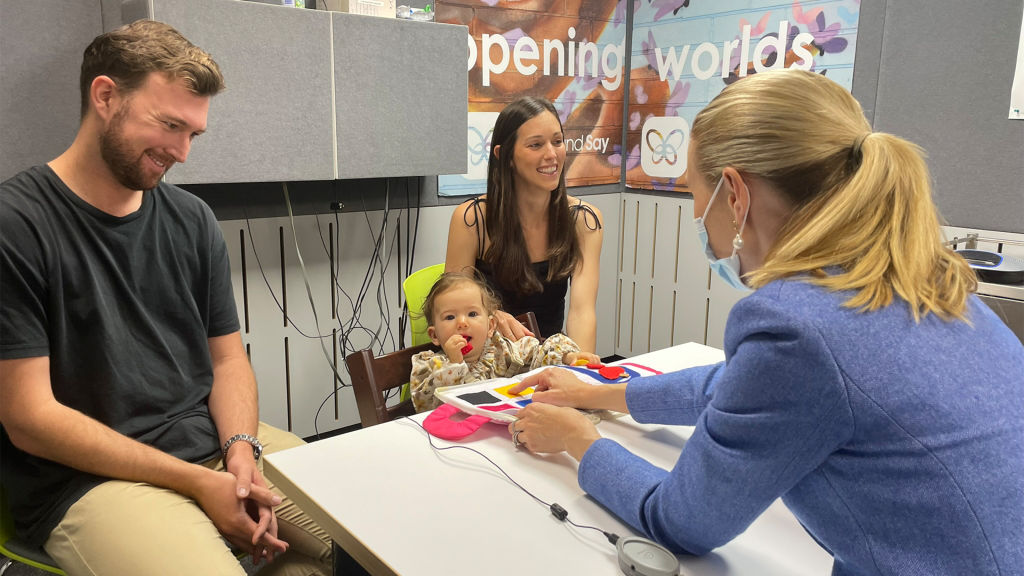
Speech Delay Treatment
A range of treatment options are available to treat a child’s speech delay at three, however they should be prescribed on a case-by-case basis and tailored to the individual child.
For example:
- If speech delay is just one symptom of a more general issue, treatment will be grouped with living with the larger issue as a whole. If your child has a hearing loss and you come to Hear and Say, you will be connected with an audiologist and a speech pathologist who will work together to get the best outcomes for your child.
- Where speech or language delays are due to ear or hearing issues, hearing technology, such as hearing aids, might be suggested initially before then focusing on the delay.
Speech therapy
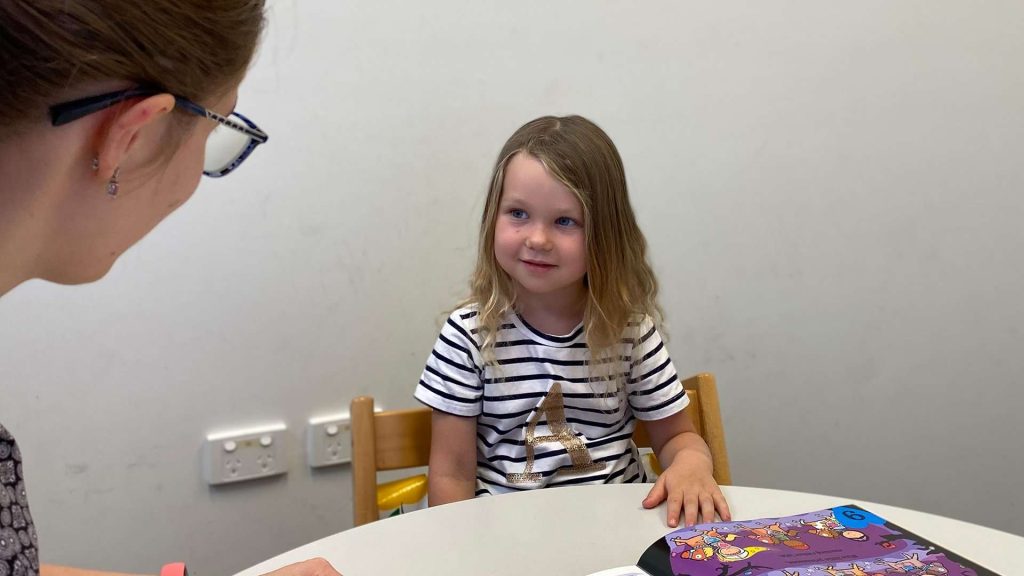
Speech therapy is the most common treatment for children with speech delay. This therapy entails the help of a speech pathologist who will assist in approving your child’s development by practicing language intervention and articulation activities, as well as oral exercises if needed.
Ongoing Support
Early intervention, such as regular speech therapy, is the best way to ensure your child can catch up to their peers and develop age-appropriate speech and language skills. By intervening early, the child has a greater ability to catch up to their peers and they will find it easier to learn to hear, listen and speak as well as new skills.
Book an AppointmentTips for parents of late talking toddlers
Raising a child with speech delay can be difficult at times. As they can struggle to express their emotions effectively it can lead to them acting out, irrational behaviour and anger.
Here are few examples of activities you can do at home with your child to encourage verbal communication development:
- Read to your child.
- Speak to your child often, even if it is just describing what you are doing or singing a song.
- Encourage your child to speak back to you and engage in conversation.
- Praise speaking and give positive feedback often.
- Encourage your child to interact with children with good language skills.
Remember, early identification and intervention gives your “late-talker” the best chance to catch up with their peers before they begin school. If you suspect that your child has speech or language delay, book a consult with a trusted GP, paediatrician or speech pathologist today.
We’re here to help. Book a hearing test or speech and language assessment for your child.
Get in touch